Causes
Social media resolutions

Since 2010 and the winter gift-giving holidays are both over, it's time to start thinking about the new year and a fresh list of resolutions. As I began thinking about what my list could be for 2011, I thought of some social media resolutions I and others could make for the new year. Whether you're a social media super user or a newbie, there's always something we can do better to contribute to our online community or get more out of our time online. Here are a few social media resolutions I've thought of - adopt a few or add your own.
1. Listen to other people.
Whenever someone wants to suggest that social media makes people more narcissistic, all they have to do is cite the stat that half of Twitter users never read anything anyone else has to say. If this is you, not only does this make you sound like a self-centered jerk, you're also missing out on the best part of social media. I can't imagine the value of Twitter if not to engage with and learn from others.
2. Don't talk about yourself so much.
Personal stories, especially when used to demonstrate a larger truth or when told in humility, can be great ways to share your thoughts. But, as Geoff Livingston discovered, people don't always like reading about you as much as you like writing about it. He took on an experiment in December where he resolved not to use the words me, myself or I for one month in an effort to refocus his blog, and he found that traffic doubled during that time.
3. If you can't say something nice...well, you know the rest.
I'm all for lively discussion and debate via social media. Many of the best blog posts are those that become forums in which people can hash out issues and hopefully move toward a consensus. In a time in which media outlets are so segmented that you can read your daily paper, listen to your preferred radio station and tune in to your favorite news programs without ever hearing an opinion you disagree with, social media can provide a much needed platform for public discourse. Unfortunately, it's all too easy to hide behind the anonymity of a computer and post things that are snarky and hateful. If we all resolved to refrain from posting things we wouldn't say to someone's face, that might go a long way.
4. Try something new on for size.
There are so many new platforms, there's always something new to try. Never tried Gowalla, Google Reader, Causes, Sparked or one of many other tools? Spend a little time trying one out and see what you're missing.
5. Think before you post.
Transparency is great, but every now and then, we take a ride on the oversharing train. As we've seen through a few painful rounds of Facebook privacy outrage, deleting what we have posted online is not always as easy as it should be. So think about what you say, upload and tag, and check your privacy settings so you know who has access to your information online.
6. Don't be the strong, silent type.
Instead of just reading, get involved in the conversation by leaving a comment on a blog post, responding to a tweet or making a recommendation on foursquare. You have valuable things to contribute, so don't be shy about joining in the discussion.
7. Use it for good.
Maybe you spend a lot of time online - you have more Facebook friends than you realized you had in real life and hoards of Twitter followers. There's nothing wrong with using social media to catch up with old friends and make new contacts, but this year, you can also try using your online networks for good. Ask your friends to give to a birthday cause or simply share an issue or organization you care about with your friends and followers.
8. Pass it on.
Have a parent, coworker or friend who is still behind the times? Take a few minutes to show them how to get started and share some of the tips you've learned along the way.
- 2 comments
- share it


Has "do-gooding" gone mainstream?

Evidence points to yes.
I never really thought of just how much doing good has become a general part of our mainstream culture in America until I was speaking with Shira Lazar at a conference, and she mentioned that being in the nonprofit world is actually “kinda sexy now.” I had to do a double-take when she said that to see that she was serious, and internally chuckle to myself a little. I’m deep in this world, and a total geek, so yes, I absolutely think that being in the cause-related field is awesome, but to hear it from her, it really hit me: we do live in an environment now, where doing good has surely gone mainstream.
Then, I tried to think of the factors that prove this, and here is what I initially came up with.
Mainstream media is talking about it.
As in my example above, mainstream media has embraced doing good as an interesting story. Not only do media outlets, like the NY Times and Huffington Post have charity-related verticals and reporters covering the cause-related beat, but it’s also pervading other mainstream media outlets like TV. Major television networks are getting into the good game like never before. For example, the four major broadcast networks – ABC, CBS, FOX and NBC – and other cable channels featured giving and volunteerism in more than 90 shows' plotlines during the Entertainment Industry Foundation’s iParticipate Initiative last October, including shows like Ugly Betty, The View, and Desperate Housewives. The networks have also devoted prime time spots for airing large fundraising telethons. Just in our recent history, who doesn't remember the star-studdeed telethons for Haiti, Katrina, September 11, and the Tsunami. They're also even taking risks on shows and series based on doing good. Although short-lived, the TV series, the Philanthropist, was a pretty big deal for those in philanthropy in 2009. Extreme Makeover: Home Edition, a show based on designers racing against the clock to provide home renovations for deserving people, which always ends in a tear jerking story, has been a hit since it first aired in 2003 and is still going strong. And, it's a reality show ... I think we can all agree, if there's a reality show on it, it can be considered mainstream!
Celebrities are doing it.
Interrelated to mainstream media is celebrities; one thrives on the other. There have been quite a few posts over on the Case Foundation site about celebrities doing good and we will continue to feature great projects we come across, because one thing is for sure - people pay attention to what celebrities do. Like it or not, they have the ability to draw public attention to their interests and influence trends. Who doesn’t know that Bono is tied with relief work in Africa, Angelina Jolie is a UN Goodwill Ambassador, Ashton Kutcher is all over Twitter in support of causes like Malaria, or of Oprah’s Angel Network. Although you may not know exact details of their involvement, there is a general knowledge and common understanding among most of the country of these stars' interests and goings on, probably due to the fact that mainstream media reports on and highlights it.
Social media makes it so easy to join the do good bandwagon.
Or, the Slacktivism argument. As defined by Wikipedia, Slacktivism is “considered a pejorative term that describes 'feel-good' measures, in support of an issue or social cause, that have little or no practical effect other than to make the person doing it feel satisfaction. The acts also tend to require little personal effort from the slacktivist.”
What people have considered as examples of slacktivism include wearing awareness wristbrands that support a cause, taking part in short-term boycotts such as Earth Hour, putting a magnet/bumper sticker on a vehicle. And now, the quick and easy online versions include signing online petitions, joining a Facebook group, tweeting to support a cause, donating small dollar amounts online or via text-to-give campaigns, etc. Although Wikipedia notes that slacktivism has little or no practical effect, the merits and impact of slacktivism has been hotly debated. Here is what Dan Morrison wrote earlier this year in a guest post, that I tend to agree with:
Slacktivism emerged because social media tools gave slackers with a heart an opportunity to get involved on their own terms. It is a mistake to think that slacktivists are just lazy. Some are too busy or uncomfortable getting involved with a cause in a public manner. Texting, tweeting and social media gave them the ability to give during the limited time they had or provided the social cover they needed to get involved. So I think we should ask not what the slacktivist can do for us, but what we can do for the slacktivist.
For some other great takes on the topic, check out these articles and posts:
- Fast Company: Helping Humanity With a Click of the Mouse by Nancy Lublin
- The Seattle Times: Social network campaigns push ‘slacktivism’ to new heights by Christopher Borrelli
- The Huffington Post: Slacktivism Strikes Back by Andrew Sniderman
Regardless of which side of the argument you fall on, the fact of the matter is that the internet is making it so much easier to pipe up and say you support a cause. Examples like the prevalence of people sporting the yellow Livestrong bracelets and success of campaigns like the American Red Cross's text-to-give for Haiti campaign that resulted in over $32 million in donations shows that people are doing their small part - en masse.
Big brands are adopting causes.
Cause-marketing is everywhere - big brands are aligning themselves with causes as part of their companies' marketing strategies - and studies show it works. One consumer behavior study conduced by Cone showed "cause-related marketing can exponentially increase sales, in one case as much as 74 percent, resulting in millions of dollars in potential revenue for brands." Cause marketing campaigns cover a wide spectrum from getting people involved with walks and events, like the Avon Walk for Breast Cancer and American Express being a supporter of Taste of the Nation from the beginnings, to actual point of purchase and merchandising partnerships, like Product (RED), which has partnered with so many huge brands like the Gap, Emporio Armani, Nike, Apple, and Starbucks to donate a portion of proceeds from sales to combat HIV/AIDS in Africa. Consumers express their power through their purchasing decisions, and inevitably, those purse strings' pulls help drive business decisions.
A new generation of do-gooders.
Just try to throw an aluminum can in the trash and not recycling bin in front of my six year old niece, and she will be all over you with a lecture on where it's supposed to go. It seems that children and teens are being raised with a consciousness about doing good and giving back that is infused in them from multiple angles now.
Volunteering in America claims that 26% of teens volunteered as of 2009, and while volunteer rates among teenagers declined between 1974 and 1989 (20.9% and 13.4%, respectively), the percentage of teenagers who volunteer more than doubled between 1989 and 2005 (from 13.4% to 28.4%). This may have something to do with the trend in schools requiring service credits for graduation from high school, and sometimes even junior high. There is some level of this happening in elementary schools as well, because my brother and sister-in-law never had to teach my niece about recycling. So, something that may have been taught to children and youth mainly by their parents, families and friends, is now being exposed to them via their schools as well.
So, what does all this mean?
I think there is plenty of evidence out that there suggests doing good has gone mainstream. But, the more important question is, what do we do with that? Although it's fantastic that this idea of doing good is part of our nation's general culture and psyche, does it mean that people will lose sight of real impact and will it be an excuse for people to feel like they don't need to do more? How can the nonprofit sector (or all sectors for that matter) really embrace and then leverage this attitude?
Let me know your thoughts in the comments below, and I will be expanding on the ideas in this post and integrating your comments into a series of posts over on the Case Foundation blog.
- 7 comments
- share it
It's Beth's Bithday, "Be A Generous Geek"
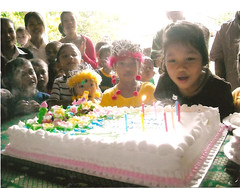
As social media maven Beth Kanter celebrates her 53rd Birthday today, she does so in true Kanter style, using the tools and techniques that she blogs about each and everyday to teach, inspire and raise money for the Sharing Foundation which will help send 53 more Cambodian children to school.
Be A Generous Geek: Mashable Summer of Social Good
Happy Birthday Beth from all your friends at the Case Foundation!
- 1 comment
- share it
Feeling "Whelmed" in a Cause Driven World

Over the long weekend I had an opportunity to catch up on some blog posts and stories that caught my eye last week. It’s not often that I’m disciplined enough to actually go back through my feeds to play catch up – but I’m glad I did. I was struck by a conversation taking place on Skoll Foundation’s Social Edge moderated by Jill Finlayson and Hildy Gottlieb called, Issue Fatigue – Fighting for Attention and Funds in an Aware World. The basic premise is that perhaps we’re not suffering from donor fatigue as much as we are overwhelmed by the causes that surround us as we go about our daily lives.
- It’s the economy. With the disappearing grants, dwindling corporate support, and declining donations, fundraising confidence is at 10 year low with more than 93 percent of fundraisers saying the economy is having a negative impact on fundraising. There is less money and more need.
- It’s the number of nonprofits. With more than 1.5 million in the U.S. alone (up about half a million in the past four years), and new people starting nonprofits, appeals are up and competition for discretionary funds is greater.
- It’s the awareness. With Al Gore's Inconvenient Truth and global leaders speaking out, people believe they need to change their habits to save the world. We have reached a tipping point in public understanding of climate change and many other issues.
- It’s the internet. With so many more ways for people to help and ways for nonprofits to reach supporters, it is no longer just direct mail. People can help their favorite nonprofits by nominating, voting, joining, sharing, evangelizing, blogging, petitioning, auctioning, gifting, loaning, and making small changes, taking small actions.
Is your organization or cause tredding a little differently in this new hyper-connected world? Do you see your personal style of giving changing? Or, are you just plain overwhelmed?
- 2 comments
- share it
Facebook Causes and Save Darfur Launch New Petition Application
My friend Qui Diaz of Livingston Communications just sent me this very interesting new marriage of social networking and democracy tools:
Facebook Causes and Save Darfur just launched their new petition application for the campaign. The new Facebook petition will be a gamechanger for cause-based social media marketing.
If you’re already using Facebook Causes, you can access and sign the petition at http://apps.facebook.com/causes/72?m=618c3fb4&recruiter_id=6746654. (As an incentive, Save Darfur is offering a free t-shirt to anyone who recruits 100 signatures.)
As of this morning, there were 2,022 signatures on the petition already! It's one more way to let your voice be heard and magnified for causes that are important to you.
- 1 comment
- share it
Causes On Facebook Turns 1
The Causes application on Facebook celebrated its one-year anniversary last week. I had a chance to catch up with Joe Green and Sean Parker, the founders of Causes (previously known as Project Agape), this week at the Committee Encouraging Corporate Philanthropy conference.
- Add new comment
- Read more
- share it