Front Row Seat to SXSW Via Twitter

As SXSW comes to a close, I have lived vicariously through the tweets, blog posts, and Facebook status updates which have all served as a gentle reminder that I’m not there. Let’s be honest, I have a bit of SXSW envy. For the past five days the SXSW Interactive Festival has featured a plethora of engaging panelists, digital creatives and visionary technology entrepreneurs, all in an effort to celebrate some of the best minds and the brightest personalities of emerging technology. At least that’s what I surmise from the 140 character tweets I’ve come across this past week.
- Tweet Congress [WINNER!]
- Clif Bar 2 Mile Challenge
- I Am Second
- Just in Queso
- Sunny Side
Whether you were on the ground in Austin or tuning in from the comfort of your couch and MacBook…what were your favorite moments as captured by Flickr, TwitPic, Facebook or others?
- Add new comment
- share it


Facebook Redesign: Boom or Bust for Nonprofits?
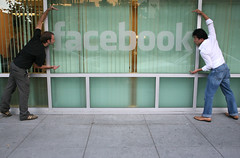
Last week as Mark Zuckerberg began to unveil the features of the now highly anticipated Facebook redesign (the second in less than a year), I posed the following question on my Twitter feed: “Interested to see if the new facebook redesign helps or hurts NPOs and their causes. Hope it helps, any ideas?”
The new interface means more sharing and communicating. This will allow donors, activists, volunteers and constituents to engage in real, substantive ongoing conversations. The applications which were such a central part of the Facebook user experience a year ago, will diminish as the authentic voice of the nonprofits and their constituents will have the opportunity to take a more active role. Gone are the days of being limited to only sharing your message with your immediate fans or supporters. Updates to an organization's Wall or other discussion sat idle and were never broadcast – in other words, if your fans and supporters didn’t return to your page, they would never know a new discussion was happening. Now, they won’t have to go to your page to interact, they will see updates in their newsfeeds and participate as part of your community.
- 4 comments
- share it
What Do All These "Friends" Add Up To Anyway?

An interview with Facebook’s “in-house sociologist” Cameron Marlow, appeared in last week’s issue of The Economist and has since created an interesting debate about the value and depth of our online social networks. Marlow looked at the size of one’s network on Facebook (in terms of number of friends) and then analyzed the rate of communication and interaction between those friends - based on comments, status updates, wall messages, etc.
- Actual legitimate friends: You may have known them since the playground or at college, these are the people who use social networks for staying up to date on what's happening in the lives of their closest connections, aka: "real" friends. Whether it's as mundane as what they're having for dinner, or as exciting as capturing their newborn's first steps - you take note and share in the moment.
- Information Seekers/Gatherers: These are the people who expand beyond those with whom you have pre-existing relationships. The lines may be a little blurrier, but there is an interest in networking, and sharing information with one another, most likely for professional reasons.
- Tried and True Networkers: These are people with thousands of connections in the online world, and likely equally large rolodexes. They believe connections are fundamental to their professional careers, and they make no effort in hiding it.
What do you think about the Dunbar Number’s relevance to organizational use of social networks? Is your organization taking different steps to engage online in a more meaningful with your donors, volunteers and constituents? How can organizations move beyond the 5-10% that seems to be the human threshold for meaningful interaction?
- 3 comments
- share it
What Does the Explosion of User Generated Content Mean for Nonprofits?

From entertainment to communications, consumers are increasingly taking charge of the creation, distribution and of course the consumption of digital media. We upload videos, download podcasts, we blog, vlog, rank, rate and tweet – and we’re doing it rates that are unprecedented in the history of media. That is according to eMarketer and their recent User-Generated Content report which analyzes a trend that promises not only to transform the face of the Internet, but also radically alter the distribution of all media.
- 1 comment
- share it
Top Ten Books for Social Citizens - Widgetized
Have blog, will list. That seems to be a popular mantra in the blogging world - and I must admit, I'm a fan of the list. My last post of 2008 went as far as spoofing "the list" by announcing our Top Ten List of Top Ten Lists for Social Good. And, I'm at it again - but this time I'm enabled by a new widget that the good folks at Living Social are beginning to test.
Living Social is the company that brought you facebook applications like Reading Social, Dining Social, and a lot of other "social verticles" where you can share, rank and comment on your favorite things. And now, they're adding a pro-social bent to all of the listing and ranking madness. As Living Social states on their site:
We think sometimes people make lists because they care deeply about the topic the list represents and can be resources for others. Our own examples are things like "10 great resources to learn about Darfur" or "5 books you need to read on global climate change". We're currently working on new features that will be just for lists that are created around causes.
Soon you'll be able to choose a specific cause to associate with your list and provide your friends with tools and actions to make your list a great resource for your cause. In the meantime, check out our list - and please add to it. What books are challenging the way you think about technology and social change?
- 1 comment
- share it
Peer-Associative Branding or, "What if We Said Your Friends Are All Doing It"

"My Head is spinning with so much that is new or needs to be taken apart and put back together again ... Amazing, isn't it?" -Beth Kanter in the comments section of her blog post, "ROI: What are the best "I" words for nonprofits to think about social media and ROI? "
I recently had a conversation with a friend of mine; he's in charge of development at a state-wide AIDS awareness/action organization. He recently directed a fundraising campaign for the organization on Facebook and I asked him how it went. It went well, he explained, but the fundraising application takes 5% of every donation and he thought he'd have been better off receiving checks from some of the donors since he lost "so much" in processing.
True - the organization gave up 5% in processing fees, but what did it gain in peer-associative branding, I asked. That is, I'm a Facebook user and I see on my newsfeed that five of my friends gave to said organization. I've never heard of it before, or I'm not too familiar with it, but I see that three of my friends, peers I have positive associations with, gave to the organization as well. My friends, via their donations, have, in addition to giving money, attached a sliver of their personal brand to the organization. It is that, not anything that the organization (or initiative) projects on its own surface, that I am attracted to when I first learn of it.
Or, I am attracted to the organization because I want to have a connection and/or sex with and/or impress the three aforementioned donors. When I read more about the organization, my reception is tainted by the positive residue of my desire for said influencers, thus I give it more attention than I would in other circumstances.
This is, of course, the essence of social branding.
And fortunately for organizations, this association is more often a positive or neutral one than it is negative. Very typically one of these scenarios occur:
- A cluster of friends that I desire for whatever cocktail of reasons have become supporters - financial or passive (joining a group or becoming a fan) - of an organization, thus I receive the organization with an open mind and am more likely to look into it in a more meaningful way, be receptive to donating to or volunteering with the organization, or a combination of both.
- A cluster of friends I don't necessarily enjoy more than I do anyone else (but do enjoy enough to be Facebook friends with) become "fans." While this doesn't evoke the same positive peer-associative response, at least I see the organization's name, establishing for the entity a predisposition of familiarity in my brain, which will be handy the next time I encounter it in a more-meaningful way.
So, more often than not, public peer-associative branding by way of Facebook transactions are either positive or benign pieces of exposure. But it's exposure, people!
Since Facebook mostly clusters people by like-interest or experience, it's a very rare occasion that I am turned off of an item over which one can become a digital supporter because of who I see associating with it. In a very rare scenario, Helen supports something and I start to ask questions. We all know a Helen - I met mine at day camp in the 10th grade, she friended me on Facebook, (likely by way of that pesky damn "FriendFinder") and in all of our forced Facebook chats she casually drops I am going to hell because I moved in with my girlfriend before we got married (or conversely, she over-zealously evokes Marx every time politics come up). Perhaps Helen adopts some cause on Facebook and then I, for some time, associate that cause as one characterized by Helen's zealotry. But, if this is unintended on the part of the organization (we should assume that some causes passionately adopted by Helen don't necessarily want/need me as a supporter), even Helen-danger is a) pretty unlikely and b) far less potent and permanent. Drawing a passive association between a lesser-liked Facebook friend leaves far less permanent an imprint than the one left by the opening my mind to positively receiving a product or organization. When I was little, my desire to want something that the cool kids had far outmatched the intensity with which I did not want something less cool kids had.
Need proof?
I volunteer for an organization called Maine Youth Leadership and they held a Facebook fundraiser similar to the one held for the AIDS initiative. I gave my money and when prompted, I typed why I support the organization, and this went straight to my news feed. Immediately afterward, a friend, someone who works in a fundraising capacity for a national health organization, reached out and asked if he could some how get involved by volunteering and - if we needed it - in a fundraising capacity. Either he a) learned about an organization he would have liked already visa vis my involvement or b) learned more about the organization because he was open to doing so by way of my association with it or c) a combination of the two. Either way, the 5% processing charge was certainly worth its weight in this scenario.
In part, many are initially receptive to involvement with X organization for the same reason I wanted a Trapperkeeper in elementary school:we want the cool kids to like me. This isn't to say that this is the fundamental reason for our prolonged involvement; it is to give credence to, and leverage, the birthplace of desire for association and involvement.
And remember how the fundraiser suggests he would have been better off receiving some checks in favor of paying processing fees? Imagine this in the context of the Trapperkeeper. If all of the cool kids kept their cool toys to themselves, no one else would have wanted a stake in them.
In the digital age, the monopolization of cool no longer belongs exclusively to the monied, as the small organization is offered the same knowledge and mechanisms necessary for victory in the on-going battle for public perception that large ones are. While the latter still monopolizes on person-power for larger-scale implementation, they do not necessarily have an edge on leveraging said-power smartly. 2007 and 2008 were, after all, epic years for mismanagement of corporate forays into social media, which makes some sense in the context of my personal experience in which I observed that where lean, agile organizations were less equipped in machinery and manpower, they often made remained competitive by mastering approach, innovation, and industry literacy.
In situations like these, Beth's aforementioned sentiment - that her head is consistently spinning as she interprets and reinterprets all of this change - rings so true.
Last night I was watching flipping between Law and Order and Terminator 3 (don't judge me) and I thought:
"Wow. I wish that I could go back in time and tell the 11-year-old me - the one sitting in Mrs. Wentworth's 5th grade classroom at Cornish Elementary, reading an issue of The Weekly Reader that purports that 'The Information Super Highway' is going to change everything - and tell little me, 'This is bigger than I remember you thinking it is. It's not just about making 'Oregon Trail' a cooler game. What they mean to say is that in the future, thanks to the brilliance of various scientists and digital pioneers and a series of tubes, your reputation - the intangible essence of how you are perceived by people - will actually be worth something and leveragable. And while it will be used by countless corporations to sell you crap that's bad for you and that you don't really need, it can also be used to give credibility to organizations, people, activists and public servants that are very well-intentioned. And if you know that, if you are really aware of that, you, the individual, will hold a lot of power.'"
My head's a' spinnin'.
___
Note: I should be clear that I am not necessarily in favor or against a percentage of donations going to donation-processing. I would, as a fundraiser, prefer to opt for the free option. In this case, I am merely suggesting examining that's coming out of process, and suggesting a conversation be held with regard to what, then, the fee, if any, should be.
*Photo courtesy of [xinita] failed trigonometry
- 1 comment
- share it
Los Angeles Chamber Orchestra Supports the GiveList

Whenever people ask me why I am so wildly enthusiastic about the Internet and all things social media, I point to content like the blog post from the Los Angeles Chamber Orchestra on Friday about the GiveList. (True confession: I was an enthusiastic but awful french horn player in high school).
In essence, it says they saw the tweets about the GiveList and that got the blogger, Lacey Huszcza, thinking about ways that people can support the arts without writing a check. Here is the list of sixteen ways to give to arts organizations from Lacey: Read more »
- Add new comment
- share it
Facebook Causes and Save Darfur Launch New Petition Application
My friend Qui Diaz of Livingston Communications just sent me this very interesting new marriage of social networking and democracy tools:
Facebook Causes and Save Darfur just launched their new petition application for the campaign. The new Facebook petition will be a gamechanger for cause-based social media marketing.
If you’re already using Facebook Causes, you can access and sign the petition at http://apps.facebook.com/causes/72?m=618c3fb4&recruiter_id=6746654. (As an incentive, Save Darfur is offering a free t-shirt to anyone who recruits 100 signatures.)
As of this morning, there were 2,022 signatures on the petition already! It's one more way to let your voice be heard and magnified for causes that are important to you.
- 3 comments
- share it
NCOC brings you face-to-face with Facebook panel (and more!)
If a picture is worth 1000 words, then a YouTube video is worth conference fees and several hours of your life -- particularly when it's bringing you a fascinating panel from NCOC about Facebook's role in and impact on civic engagement.
That's right ... today's post is the as-promised third installment of our NCOC coverage, from our introduction, to Kristen's event notes, to the final video of Bill Galston, Sean Parker, and Joe Trippi (see below). So far, the comments and reactions here have been really thoughtful, even extending into posts/threads over at Beth's Blog and PhilanTopic.
So give this choice piece of cinema a look-see, and then check out the rest of Kristen's coverage after the fold!
- Add new comment
- share it
NCOC Answers: Can Facebook replace face-to-face?
The 55th Annual National Conference on Citizenship is taking place today at the National Archives in Washington, D.C. Thanks to the leadership of new Executive Director David Smith, a major component of this year’s session is the use of technology and new media as an indication of civic health and a tool for effective community organizing.
The morning’s sessions have already proven interesting and useful for Social Citizens on a variety of levels, and a longer blog is to come, but I just couldn’t wait to pose the following questions to you from this morning’s panel. Sean Parker of Facebook and Bill Galston from the Brookings Institution, engaged in a panel discussion moderated by Joe Trippi entitled “Can Facebook replace face-to-face?” which took an in-depth look at social networks as communities and organizing tools. Read more »
- 2 comments
- share it