


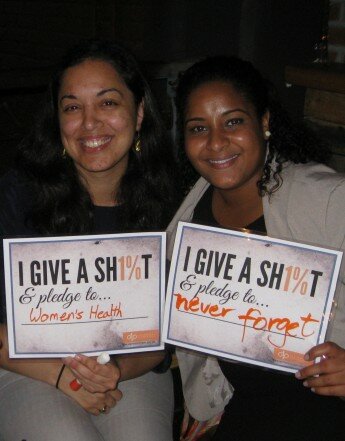
Photo courtesy of One Percent Foundation
This week, we take a look at the development and fundraising sector and explore how the next generation is shaping this profession, issue area, and field--both as stewards of this department and as contributors and philanthropists. Guest bloggers who are thought leaders in this sector share their ideas on what is to come.
Empowering Millennials to Have Impact
Daniel Kaufman is a Social Citizens Ambassador and the Co-Founder of Third Plateau Social Impact Strategies, a consulting firm that specializes in designing and implementing innovative next generation philanthropic engagement opportunities for individuals, non-profits, foundations, and businesses. He is also the Co-Founder of the One Percent Foundation, an organization building a broad-based movement of next generation philanthropists by making giving accessible, engaging, and meaningful.
Over the last few days, this blog has featured some valuable insights regarding Millennial responses to traditional fundraising and tips for raising money from Millennial audiences. As the co-founder of Third Plateau Social Impact Strategies, a company that spends a great deal of time on nonprofit development strategy, I couldn’t agree more strongly with my colleagues’ advice.
Setting goals, providing accessible training and coaching, and making natural and authentic asks are vital elements of raising money from Millennials.
With that said, I approach Millennial fundraising from a slightly different orientation. I believe that the most effective fundraising, especially from Millennials (and other small donors), emanates from thoughtful and consistent community organizing and engagement. I have little doubt that this perspective stems from my work with the One Percent Foundation (“OPF”), a national network of Millennial-focused giving circles. OPF seeks to make giving accessible, engaging, and meaningful for Millennials with the goal of fostering a thoughtful, generous, and strategic generation of philanthropists.
In part, I view OPF’s founding as a response to the negative elements of traditional fundraising. Most fundraising is formulaic: an organization identifies a need, makes a relatively generic ask of an individual, and if the individual makes a commitment, more asks are made at regular intervals. Those with greater financial resources get greater access to the organization, including access to executive staff and policy-setting and leadership roles. While not all nonprofits fit this mold, the often transactional nature of traditional fundraising led OPF’s founding members to be fairly cynical about our ability to have an impact. As a community of people without a great deal of individual financial resources, we believed that one way for us to increase our influence and impact was to join together in funding the issues and organizations that reflected our collective interests and passions.
The One Percent Foundation resonates with different people for different reasons, but I think a key component of our success is that we have inverted the traditional fundraising process. Instead of an external party identifying a need and then responding to it, we first built a community of Millennial donors with shared values and then figured out what to fund together.
The OPF model asks Millennials to self-identify with a community of peers and make two commitments. First, OPF asks participants to make a baseline gift to the giving circle grant fund of one percent of their annual income. Second, OPF asks participants to commit a minimal amount of time and energy to participate in the grant selection process.
Each quarter, the One Percent Giving Circle gives two grants (funded by the pooled donations) in a pre-selected issue area. The grantees are sourced through a three-step process. During the first month, participants are encouraged to nominate organizations to receive one of the grants. During the second month, OPF engages a small group of volunteers (all of whom have made the one percent commitment) to serve on that quarter’s working group charged with vetting all of the nominated organizations. OPF assists the working group in assessing the nominated organizations’ theory of change, financial outlook, and leadership and facilitates a conversation among the working group to narrow the nominees down to five finalists. During the final month, OPF disseminates educational information regarding the finalists to all of the One Percent Giving Circle participants and asks everyone to vote. The top two leading vote getters receive the quarterly grants and OPF starts the entire process anew for the next quarter.
This online aggregation of money from like-minded individuals, especially Millennials, is not, in and of itself, unique.
Crowdsourced funding and philanthropy platforms such as Kickstarter, Crowdrise, and StartSomeGood, just to name a few, have exploded over the last few years. What is totally unique about OPF’s approach is that it inverts the process. We aggregate the money without knowing exactly what organization or project will benefit from the circle’s donation. Instead, we empower our community of Millennials to allocate the raised money through an informed, democratic, and engaged process.
I find the possibilities of this giving circle model to be incredibly exciting. To catalyze these possibilities, OPF is currently developing an online platform to enable groups of friends, organizations, companies, and other communities to join together to start their own One Percent Giving Circles. Each circle will have its own focus (as determined by the participants) and be able to fund the ideas and projects that inspire them. For those looking to engage Millennials as donors and fundraisers, OPF provides a blueprint (and possibly a strategic partner) for how to build a long-term, sustainable giving community. I’m excited to see how the crowd leverages the platform to organize, engage, and empower Millennials to support a variety of causes and organizations.