



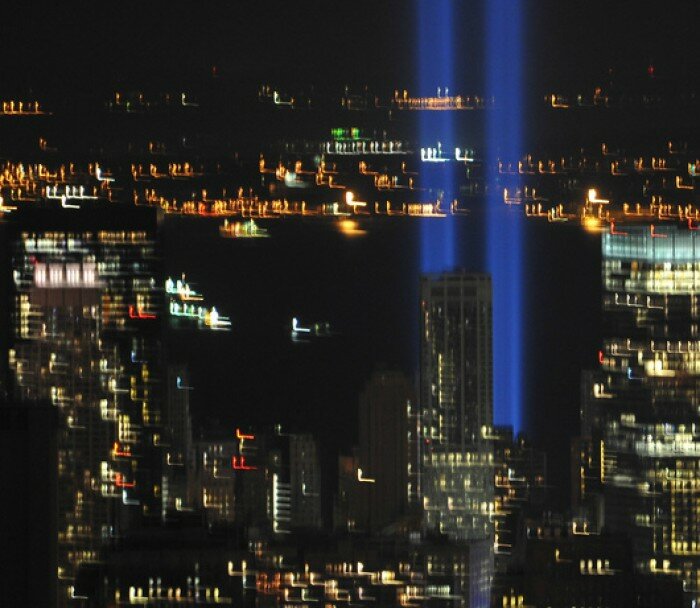
Photo Courtesy of Asterix611
It’s hard to believe that 10 years have come and gone since the day my generation was thrust into a new world – a world where politics at the local, national, and international level suddenly took on new meaning. A world that forced us to grow up a little quicker. A world that helped us develop a civic awareness that many say could only be the result of a national tragedy on a scale like September 11.
Yesterday we marked the 10-year anniversary of that fateful day, and today is 9/12/2011. It is the start of a new decade for us as Millennials in a post 9/11 era. For those on the older end of the Millennial spectrum like myself, we have now spent the past decade in the workforce,and many of us have settled down and are starting families of our own. We are armed with new technology and an awareness and appreciation for global issues, and we have been building organizations and reinventing ourselves and our institutions with an entrepreneurial flair. The events of 9/11 suddenly gave us a larger purpose – a reality check of sorts that reminded us we weren’t invincible and that we had an obligation to give back to our neighborhoods, our community, and our country.
Today as we enter the next decade of life after 9/11, we take with us vivid reminders not only of that day, but of the way in which it changed our individual narratives. We wonder what will come in the next 10 years. We lift up examples of new social innovations and technologies that have brought us closer together as neighbors, friends, and family, from Friendster to Facebook. We lift up examples of organizations that have grown and come into their own to help us find a voice and purpose.
If you look at the nonprofit landscape over the past decade, there has been a surge of young idealistic change-makers who have started their own organizations to address real problems, be it in their local or global community. They have little concern about whether their venture is a .com or .org – and more concern about whether or not their work is having an impact. While the entrepreneurial spirit that is so engrained in my generation is inspiring, there’s also a reality. The reality is that many of these new organizations are competing for limited dollars and our limited attention spans. There are simply not enough resources to support and fully fund all of the great ideas that are being generated – or the capacity to ensure they are all able to thrive.
Even so, there are also many success stories. The events of September 11 prompted people like Scott Heiferman, founder of Meetup, who said “the only time I thought about my neighbors [pre 9/11] was when I hoped they wouldn't bother me,” to suddenly launch a national platform that would bring together millions through meetups across the country and eventually around the world. Or David Smith, founder of Mobilize.org, whocreated an organization that would exist today as a way to empower and invest in Millennials to create and implement solutions to social problems. In the years since 9/11, Mobilize has merged with a half dozen smaller nonprofits with similar missions to work collaboratively to leverage the unique skills of Millennials and create solutions to social challenges.
In this next decade, my hope is that we build upon this momentum and spirit of service andfind greater opportunities to invite these emerging social entrepreneurs into our existing institutions – some of which are in desperate need of an infusion of new life and ideas. And, that we create space for greater cross-generational learning, dialogue, and debate so our institutions are strengthened rather than struggling for new ideas and opportunities.
The world my daughter will inherit is one my generation will help shape. I have full confidence that the idealism and energy that has emanated in the years since 9/11 will help create a solid foundation for continued innovation.
What new ways of thinking do you believe will come as a result of the Millennial Generation coming of age in the next 10years? How will this influence continue to reshape our institutions?